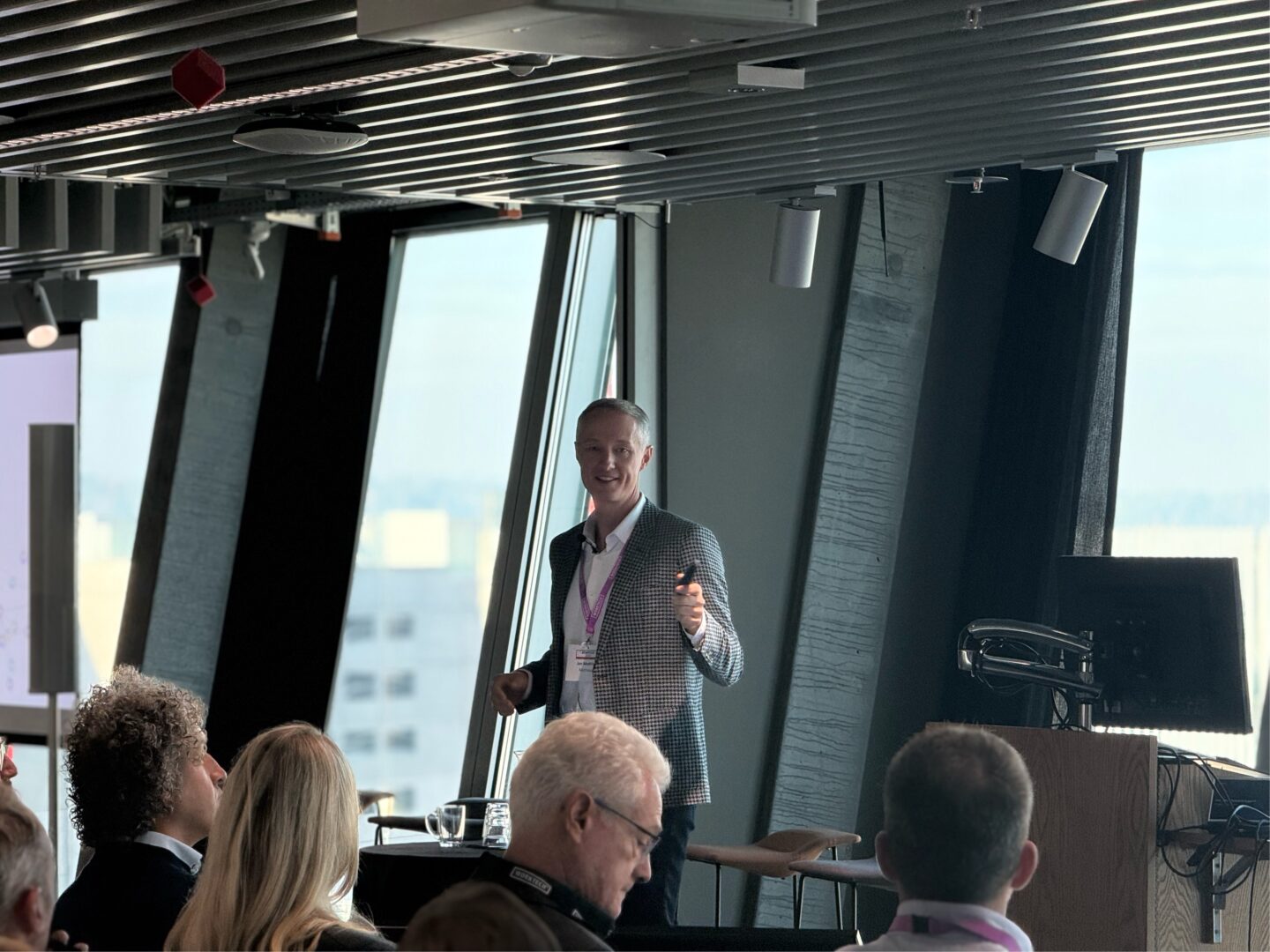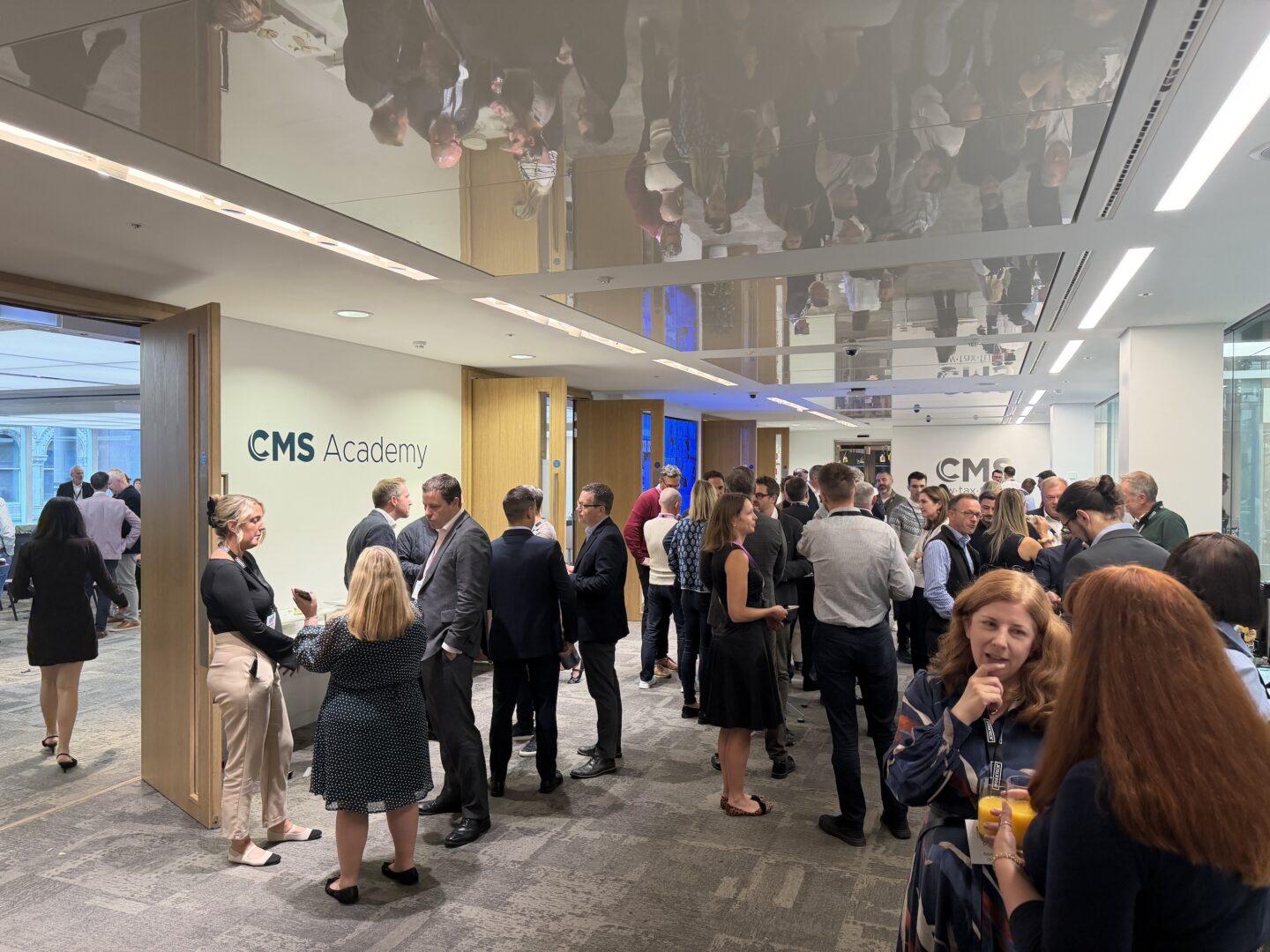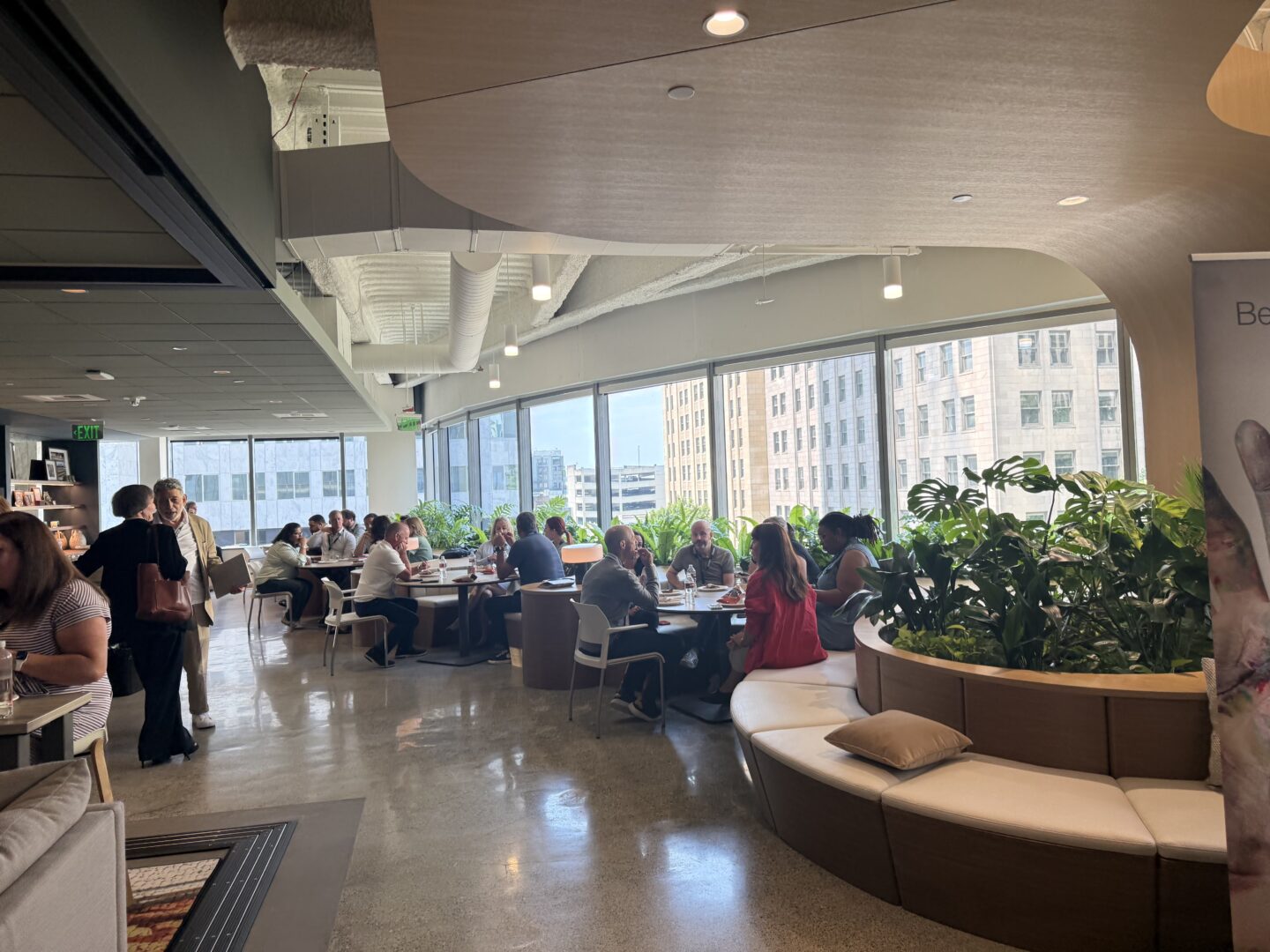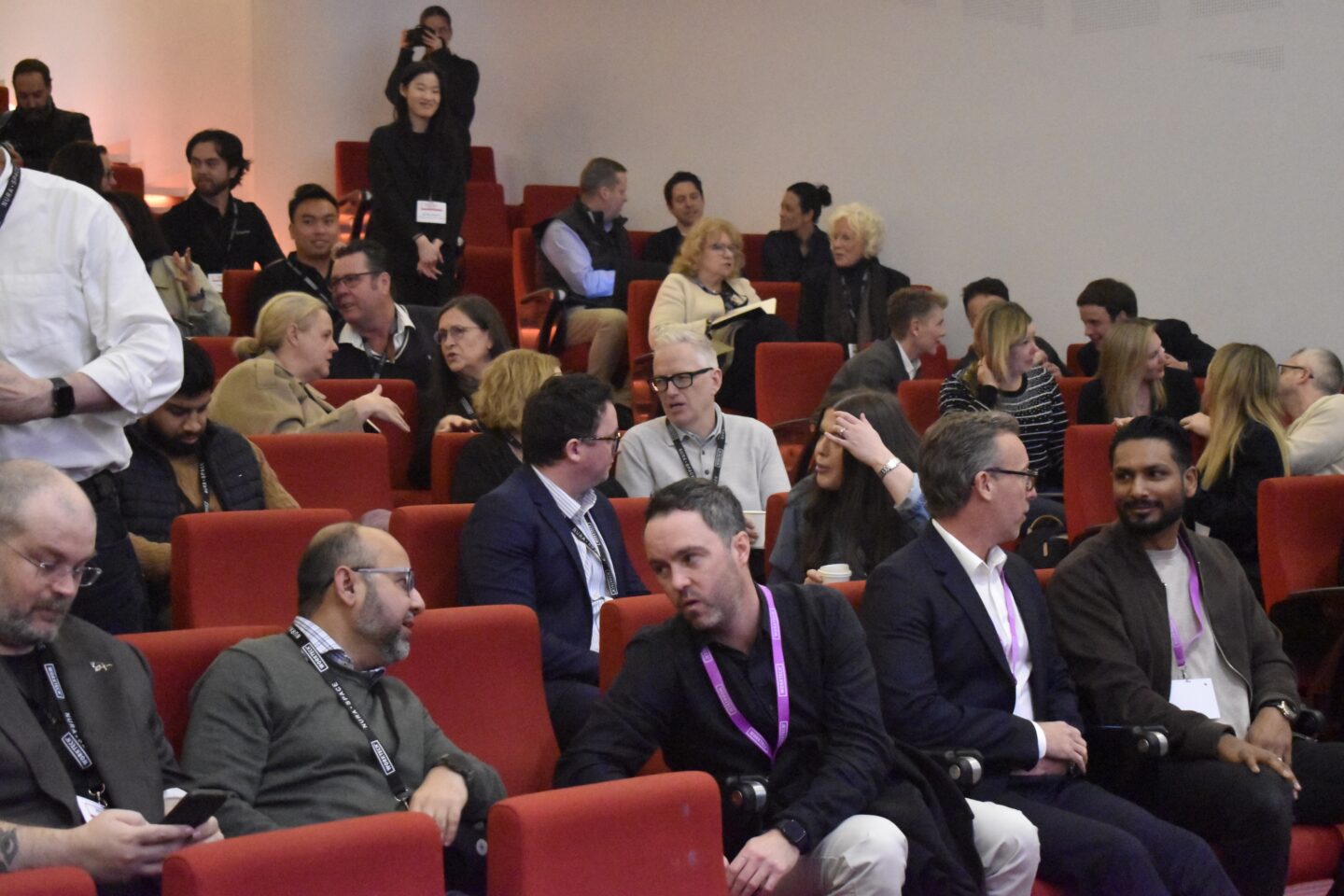
At WORKTECH Sydney 2026, one question ran through the day: what does the workplace now need to prove?
Hosted at Westpac’s Barangaroo workplace, the discussion brought together leaders from property, design, technology, finance, transport, legal, consulting and workplace operations.
The audience’s early responses set the tone: the biggest workplace challenges are no longer just about desks, utilisation or return-to-office policy. They are about culture, belonging, focus, wellbeing, collaboration, data, technology and the ability to create places people actively choose to use.
Westpac’s Paul Orgles opened with a deliberate provocation: his vision of the future workplace is one with ‘no desks’. Not because work disappears, but because the office becomes less about individual task processing and more about connection, collaboration and the human relationships that make distributed work possible. The challenge, he suggested, is not simply to make people come in, but to clarify what the office is for.
That idea of proof shaped the first part of the programme. The new Sydney Fish Market and One Kent Street offered two very different answers to the same question. The Fish Market, a complex civic and commercial project, had to serve operators, catchers, wholesalers, retailers, customers and the wider city. Its success lies in refusing to simplify that complexity. The building puts operations on show, invites the public in, and turns a working market into a civic amenity.
One Kent, by contrast, showed how adaptive reuse can give a heritage asset new relevance. By opening up the building, adding new amenity – operable windows, terraces, natural ventilation and sustainability upgrades – the project reframed heritage not as a constraint, but as a platform for future workplace experience.
Across both projects, the message was clear: buildings now must justify their value across multiple dimensions. They must work commercially, environmentally, socially and experientially. They must serve current users while remaining flexible enough for future ones.
That same pressure is being felt inside organisations. Westpac and Transport for New South Wales explored what it means to ‘earn the commute’ in large, complex organisations. For Transport, the workplace challenge is especially varied: frontline operational teams have no choice but to show up, while office-based teams need flexibility, connection and reasons to gather. The answer is not a single workplace model, but a portfolio that supports team connection, personal choice and access to spaces closer to where people live. For Westpac, the task is to keep testing, learning and adapting while recognising that the office must compete with the comfort and convenience of home.
Technology was a recurring part of this discussion, but not as a simple solution. AI, Copilot, VR, spatial computing and hybrid tools are changing how teams work, but speakers repeatedly returned to the importance of human connection.
The workplace cannot be designed only around emerging tools. It must also protect culture, inclusion and the small moments of joy that help people feel part of something.
The legal workplace panel brought this into sharp focus. Law firms are deeply traditional, partner-led environments where status, privacy and space have long been intertwined. Yet hybrid work, client expectations, digitisation and AI are forcing change. For A&O Shearman, the move to 33 Alfred Street was supported by data, staff engagement, change champions and sustained communication before and after the relocation. Dentons, at the beginning of its own journey, highlighted the difficulty of building consensus in a partnership culture where individuals often think first about their own practice before the wider firm. The lesson was practical: change management is no longer optional. It can be the difference between a new office that works and one that simply looks different.
Data then became a central theme. Macquarie’s workplace journey showed what happens when real estate teams treat data and technology as core capability rather than an additional task. Over five years, the organisation focused on cleaning and structuring data, automating pipelines, creating dedicated accountability within the real estate team and building a culture where decisions had to be evidence-based. That groundwork helped support significant portfolio change and around $200 million in occupancy cost savings, while also enabling more mature conversations about workplace performance.
The key point was not that data replaces judgement. It was that trusted data changes the quality of the conversation. In the workplace, data often becomes political before it becomes operational. The organisations that make progress are those able to combine quantitative evidence with qualitative insight, governance, transparency and a clear understanding of what they are trying to achieve.
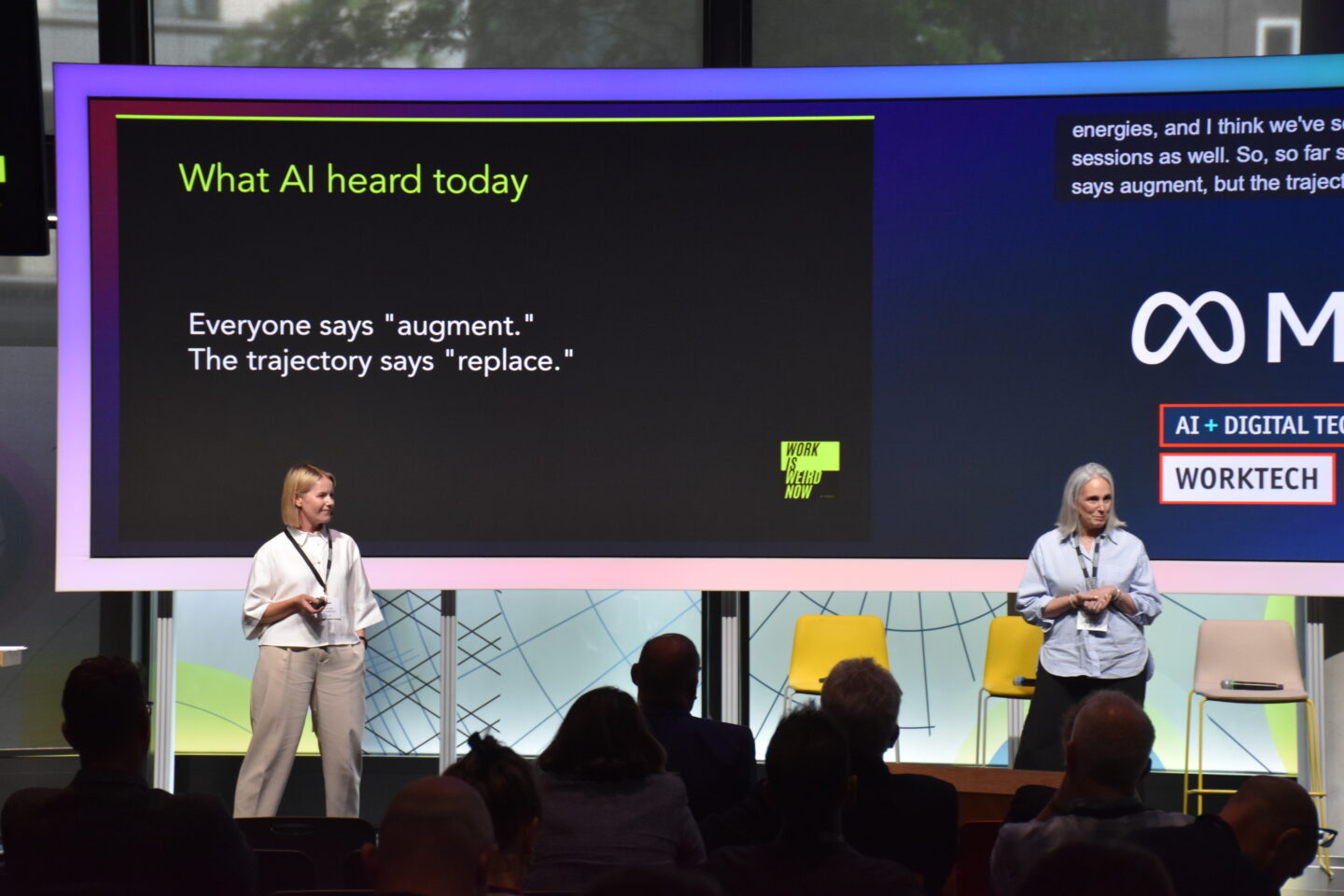
That was also the message in the sessions on AI. Speakers warned against treating AI as a magic layer that can be added to broken processes or poor data. Without focused, high-quality enterprise data, AI applications will fail. Used well, AI can help with tasks such as documentation checking, pattern recognition and faster testing. But it cannot originate purpose. It cannot understand nuance unless the human brief, data and governance are strong enough. The future of AI in the workplace is not about replacing expertise, but changing where expertise is applied.
The afternoon also widened the definition of workplace performance. Sound, sensory experience and psychological regulation were framed as critical but often under-measured factors. Marcus from Moodsonic argued that sound strategy belongs in the brief before the complaints arrive. Noise is not just a decibel issue; speech, predictability, control and context all shape whether sound supports or undermines work. Adaptive soundscapes, sensor data and multi-sensory design can help create environments that support focus, privacy, restoration and experience.
Darren Fleming took the wellbeing conversation further, arguing that a beautiful workplace only becomes a multiplier when people are regulated enough to use it well. Burnout, distraction and exhaustion cannot be solved through space alone. His model of flow, force, forgotten and flashback gave the audience a language for the cognitive loops that drain energy and reduce productivity. The implication for workplace leaders is significant: performance depends not only on the environment, but on people’s ability to manage attention, nervous system load and the internal friction that prevents deep work.
White Fox offered a very different case study: a bold, brand-led headquarters designed for a fast-growing, predominantly Gen Z workforce. Its 13,000 sq m workplace was created not simply because the company had outgrown its previous buildings, but because it wanted to signal its next stage of growth, attract global talent and create a place where people could build careers. The company remains five days in the office, not through mandate alone but by designing a workplace people want to be part of. A gym, sauna, café, auditorium, wellness room, social spaces and highly branded environments all support a culture that is energetic, connected and intentionally non-hierarchical.
Yet the White Fox story also carried a broader lesson: an environment does not create culture by itself, people do.
The workplace can amplify culture, but leadership, rituals, communication and shared experiences bring it to life. Initiatives such as house colours, monthly events, book clubs, run clubs and team activities help ensure the building is not just impressive, but actively used.
The final panel returned to the workplace planning cycle. The post-pandemic pause is ending. Lease events are arriving. Organisations are again making long-term decisions, but in a world that is moving too quickly for static answers. EY, Pinterest and Gensler discussed the need for workplaces that can be checked, evaluated and reconfigured over time. A space built today cannot assume one fixed pattern of work for the next decade. It needs feedback loops, flexible infrastructure and the ability to evolve as density, behaviours, technology and expectations change.
By the end of the day, the answer to the opening question was clearer. The workplace must prove that it is worth the commute, worth the cost and the effort of change. It has to support focus and collaboration, culture and inclusion, data and intuition, technology and human connection. And it must be measurable, but not reductive, flexible, but not generic and experiential, but not superficial. Above all, it has to be intentional.
The office is no longer a default setting for work. It is a strategic tool whose value must be designed, evidenced, managed and renewed.