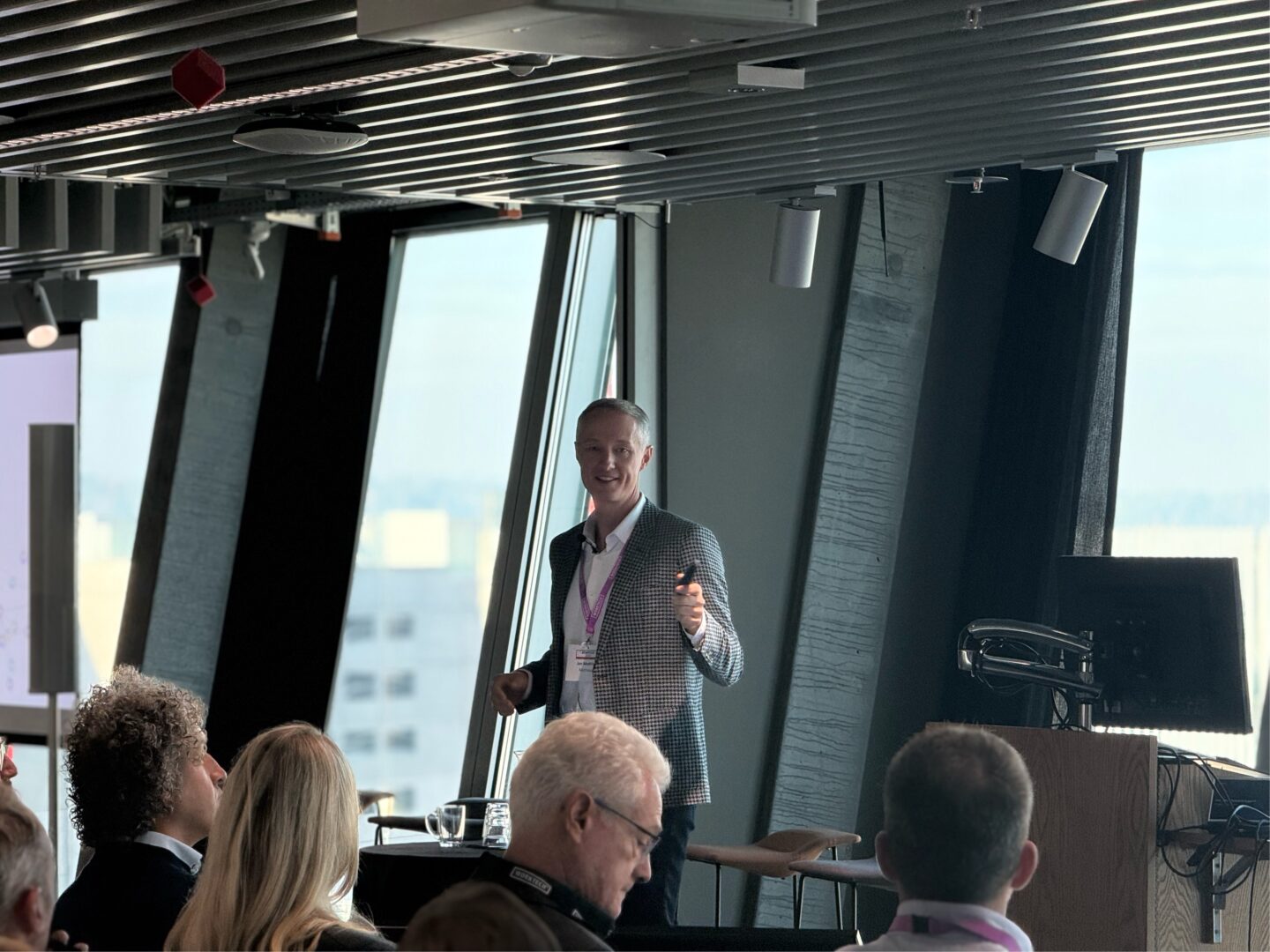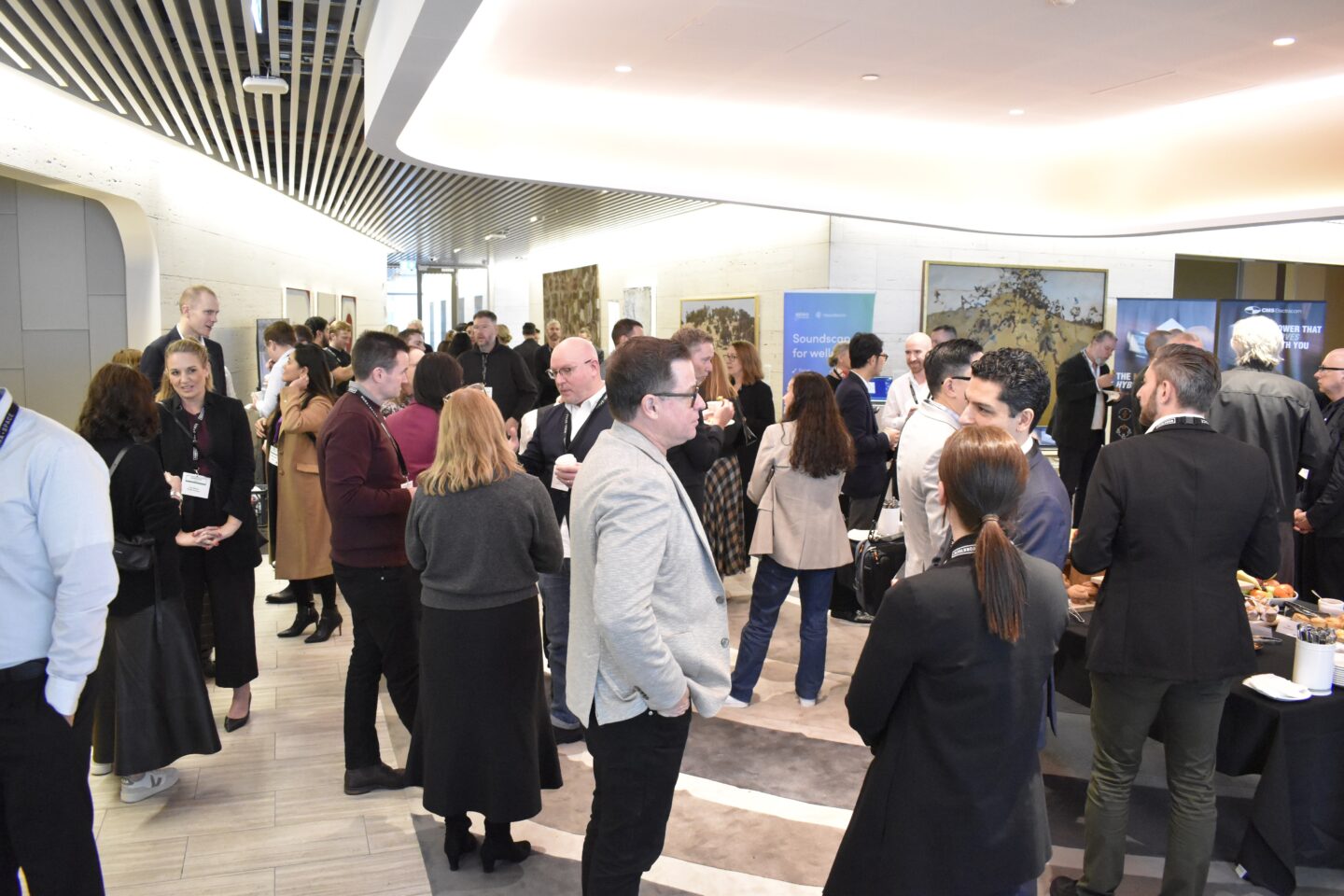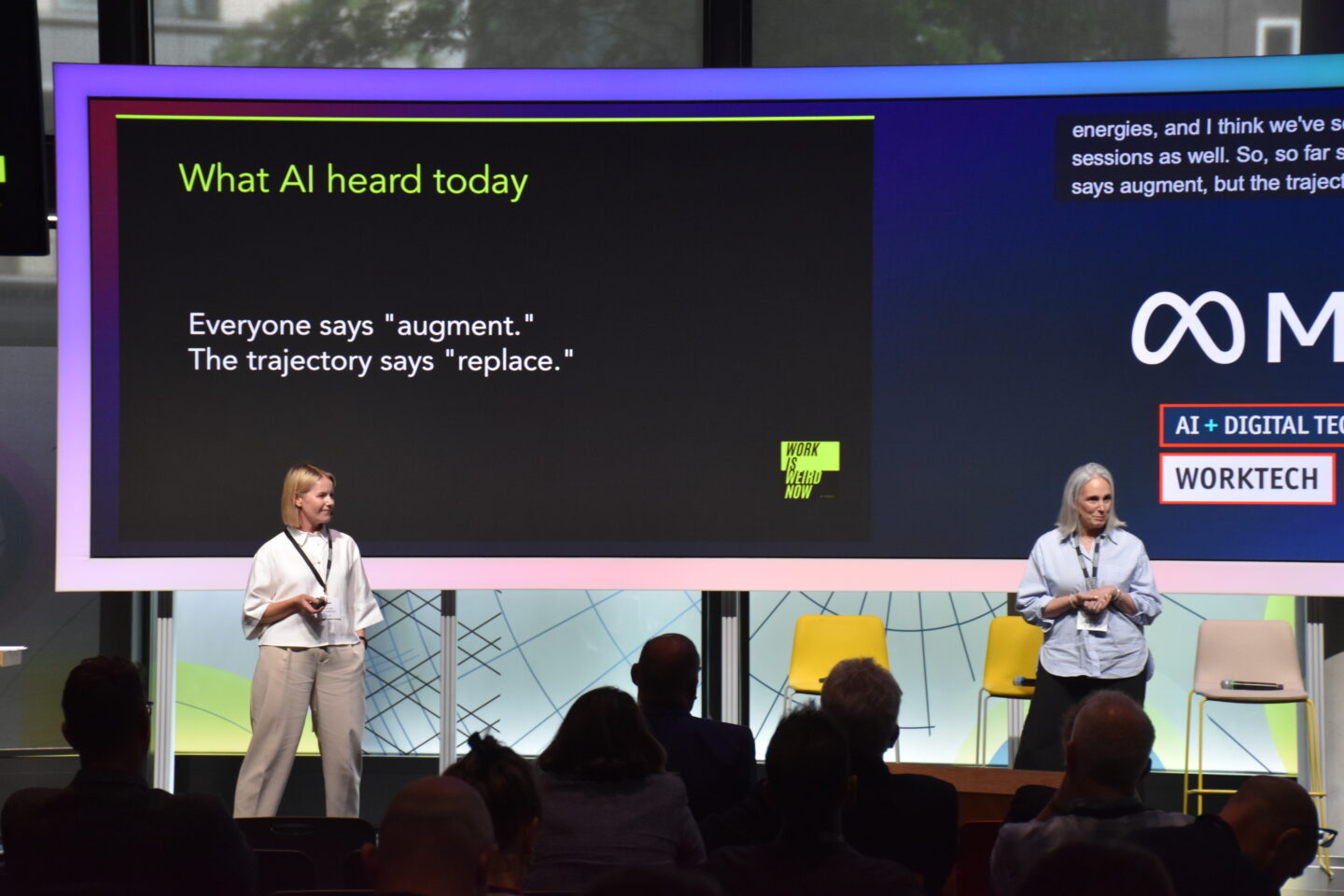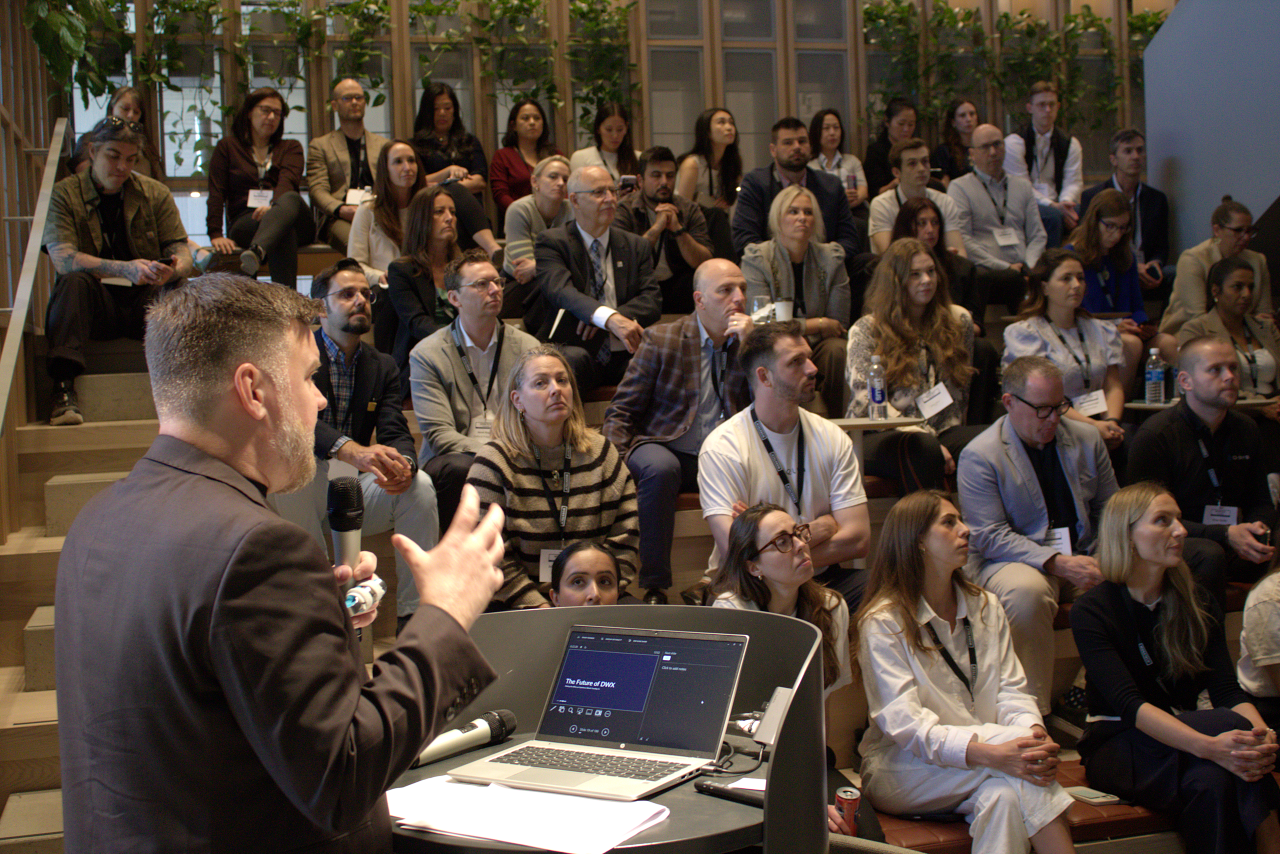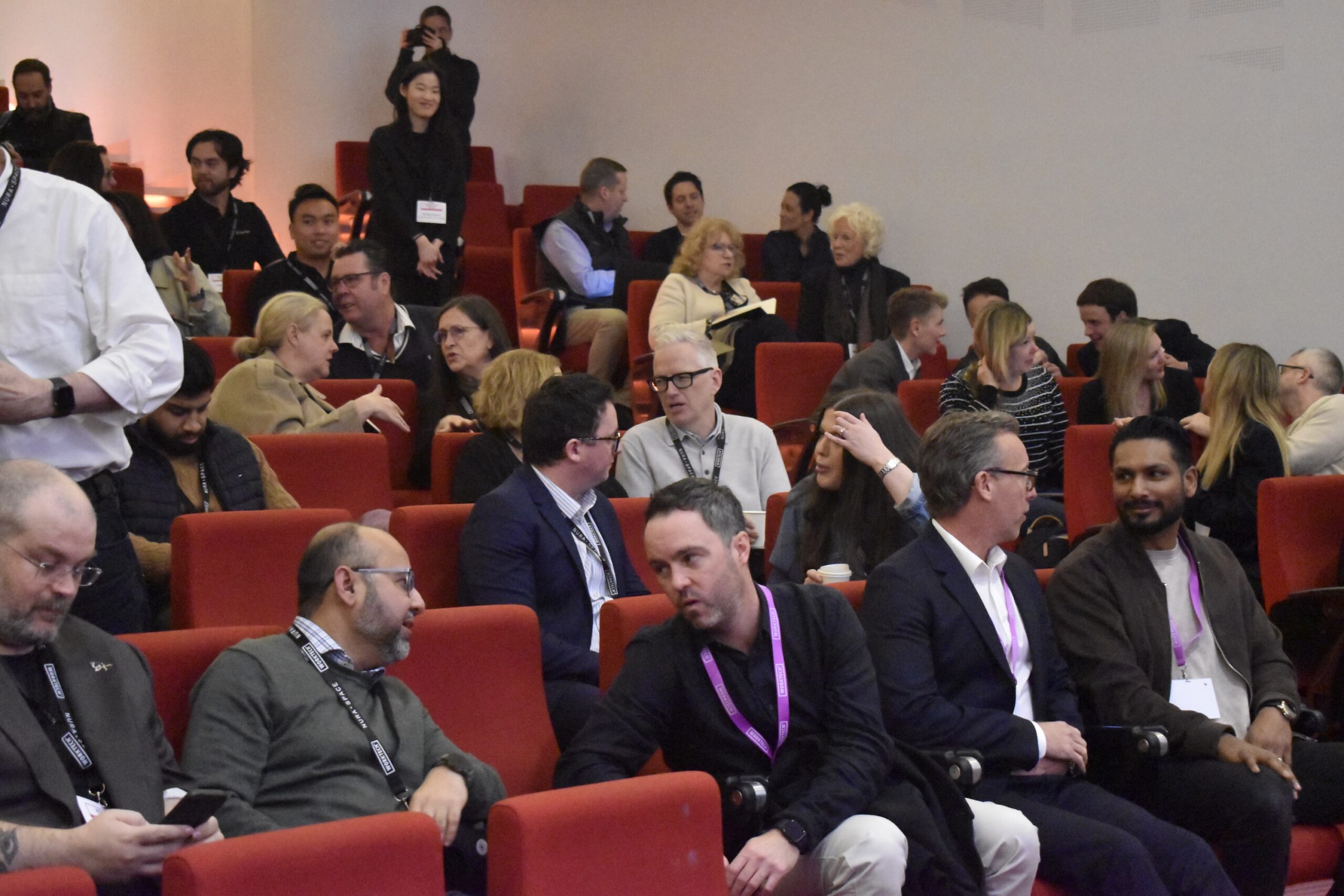
What will make the workplace valuable as artificial intelligence transforms how work is done? At WORKTECH26 Melbourne, hosted by Swinburne University of Technology, the answer was not a single technology, design solution or return-to-office policy. Across discussions spanning AI, hybrid work, workplace data, sensory design, digital twins and organisational culture, one message remained consistent: the future workplace must be designed and managed as an interconnected system.
Technology may accelerate individual work, but organisations will still depend on human alignment, trust, creativity and connection. Data can support better decisions, but only when leaders ask the right questions and bring information together across organisational silos. And an attractive office will achieve little unless leadership behaviours, team rituals and workplace operations give it meaning.
How will AI change the role of the office?
AI is already allowing employees to complete research, analysis, administration and content production more quickly. However, faster individual work does not automatically create a faster or more effective organisation.
Rizvi Mridha, Co-founder and CEO of Hampr, observed that as employees accelerate their work independently, the need to align in person may become more important. People can rapidly move in different directions unless teams have opportunities to compare ideas, coordinate activity and agree priorities.
The office therefore has an emerging role as organisational alignment infrastructure. It is a place where people can make sense of AI-generated possibilities, resolve ambiguity and combine different perspectives.
Luke Bettles, Workplace Operations Manager for APAC at Xero, argued that workplaces can no longer remain neutral containers. They need to express what an organisation values and deliberately support activities such as focused work, social interaction, learning and collaboration.
By 2030, successful organisations may not simply be those with access to the best AI tools. They will be those that can combine technological speed with human coordination, a distinctive culture and clarity of purpose.
What makes an office worth the commute?
The conference challenged organisations to move beyond attendance as the principal measure of workplace success. The more useful question is whether the office offers something employees cannot access as effectively elsewhere. This might include connection with colleagues, access to leadership, mentoring, collaboration, learning, hospitality or a stronger sense of belonging.
Hospitality was repeatedly described not as an employee perk, but as part of the workplace’s social infrastructure. Food, coffee and events can create predictable opportunities for people to meet, establish relationships and exchange information. These interventions do not always need to be expensive. Xero’s regular breakfasts, lunches, hackathons and social activities give employees an understandable rhythm to office life. People know when colleagues are likely to attend and what they can expect when they arrive.
Leadership visibility is equally important. A well-designed office will not generate connection if senior leaders rarely use it. Space, leadership and repeated rituals must reinforce one another.
The arrival experience also matters. Reception, hospitality, social areas and technology establish the tone of the workplace from the moment someone enters. Instead of treating these elements as decoration, workplace teams should consider how they influence behaviour, trust and participation.
What makes hybrid teams successful?
Research presented by Lynette Caruso of the Australian National University showed why hybrid work should not be reduced to a debate about the correct number of office days.
Organisations can create a culture of compliance when they focus primarily on attendance targets. Employees may meet the required number of days without improving collaboration, cohesion or performance. In contrast, policies that are supported by organisational values and practical team agreements can give employees greater clarity about how and why they should work together.
Caruso identified three priorities for hybrid team leaders: communication, collaboration and cohesion.
- Communication channels should match the message. Complex, sensitive or culture-building conversations may benefit from being conducted in person, while straightforward updates can often be handled digitally.
- Collaboration also needs to be designed. Bringing people into an office does not guarantee that meaningful collaboration will occur. Teams need to agree which activities benefit from physical proximity and which are better completed remotely.
- Cohesion requires managers to create opportunities for personal connection, psychological safety and open discussion. Explicit team agreements can establish expectations around availability, communication, decision-making and shared office time.
The commute must also be recognised as part of the employee experience. Transport quality, distance and travel time all influence people’s willingness and ability to attend. Employers cannot control every aspect of the commute, but they can consider flexible hours, purposeful scheduling and whether some travel time can reasonably be treated as working time.
Why do organisations still struggle to make evidence-based workplace decisions?
Workplace teams now have access to badge data, desk and room bookings, occupancy sensors, employee surveys, technology usage and portfolio costs. Yet decisions are still frequently shaped by leadership assumptions or observations from a single busy office day.The problem is not necessarily a lack of data. It is often a lack of integration, trust and governance.
The evidence panel, featuring representatives from RAC Western Australia, EY and Nura Space, argued that workplace information should not be examined in isolation. Attendance data becomes more valuable when combined with employee sentiment, HR information, room usage, business performance and qualitative research. Perfect data is unlikely to exist. Leaders should instead begin with a clearly defined business question and identify which information is sufficiently reliable to support a decision.
This also helps organisations distinguish between reversible and irreversible choices. A workplace experiment that can be adjusted should not be delayed by an endless search for certainty. Organisations can test, observe and refine if leaders explain the reasoning behind the decision and continue to measure its effects.
A practical maturity path emerged from the discussion:
- Create visibility of the relevant information.
- Establish trust in the quality and interpretation of the data.
- Use the evidence to support timely decisions.
- Build the foundations required for AI-enabled analysis.
Organisations that attempt to introduce AI before addressing fragmented systems, unclear ownership and inconsistent governance will struggle to generate dependable insights.
Are workplace designs becoming too similar?
Dr Agustin Chevez questioned whether workplace design is converging around a familiar set of visual and functional conventions.
Shared trends, technologies, procurement processes, success measures and award systems can all encourage different organisations to arrive at similar solutions. Design awards may also favour visual impact, craft and materiality without necessarily proving that a workplace improves employee experience or organisational performance. This creates an important distinction between a workplace that looks impressive and one that works effectively.
Chevez’s research found little overlap between workplaces celebrated by design awards and organisations recognised through employee experience indices. This does not mean that beauty and performance are incompatible. It suggests that the industry needs broader evidence and a more balanced definition of success.
Workplace design should be assessed against the organisation’s purpose, operating model, workforce and desired outcomes, rather than against a standardised image of what a contemporary office should look like.
How can workplace teams use AI practically?
Tam Galahena of Enable AI encouraged delegates to stop treating AI solely as an email-writing or summarisation tool. Its greater value may lie in acting as a thinking partner that can review complex material, identify risk, combine information and explore alternative scenarios.
In one demonstration, AI examined a vendor statement of work, identified commercial gaps and produced a structured risk register. It was then used to examine the interaction between different contractual clauses and to create a shareable dashboard.
The central lesson was the importance of context. Generic instructions produce generic answers. AI becomes more useful when it understands the user’s responsibilities, objectives, source materials, constraints and preferred output. Organisations can also codify the methods of experienced employees as reusable AI workflows. This could allow more people to apply established review processes, decision frameworks and organisational knowledge consistently.
Galahena proposed a three-part framework:
- People: improve individual performance and AI fluency.
- Process: map workflows and determine which activities should be completed by humans, AI or a combination of both.
- Product: use organisational knowledge and data to develop services or capabilities that were previously impossible.
This adoption begins with leadership. Executives cannot govern AI effectively without understanding how it is being used, where it creates value and where human oversight remains essential.
Why should workplace design consider sound and sensory experience?
Visual design dominates most workplace briefs, although sound has an immediate effect on concentration, comfort and wellbeing.
Marcus Rose demonstrated that sound is influenced by more than decibel levels. Speech content, predictability, control and the relationship between adjacent activities can determine whether an environment feels distracting or supportive. Sound strategy should therefore be developed zone by zone. A collaborative area, café, reception space and focus zone each require different conditions.
Adaptive nature soundscapes can help reduce speech intelligibility while creating a more restorative experience than conventional sound masking. Sensors can also reveal how noise affects different areas and allow sound data to be examined alongside occupancy, lighting and air quality.
Sensory design can additionally strengthen identity and connection to place. A project for Medibank incorporated locally relevant natural sounds and Indigenous language into the arrival experience, creating an environment rooted in its geographical and cultural context.
The broader principle is clear: sound should enter the design brief before complaints begin, rather than being treated as a problem to retrofit later.
How can digital twins improve workplace and property decisions?
Digital twins and geospatial AI offer organisations a way to test possible futures before committing resources.
Dr Hossein Rizeei of McGregor Coxall showed how data can be converted into interactive models for scenario planning. These systems can assess factors such as heat, flooding, accessibility, landscape, energy performance and development impacts.
The same principle can be applied to buildings and workplaces. Rather than viewing a digital twin as a static visual model, organisations can use it as a decision-making environment that combines multiple information sources and evaluates alternatives.
Digital twins do not replace designers. They provide designers and decision-makers with more options, clearer evidence and improve understanding of likely consequences.
What can workplace leaders learn from White Fox Boutique?
White Fox Boutique’s new Sydney headquarters provided a distinctive response to concerns about workplace sameness.
Designed for a workforce of predominantly Gen Z employees, the headquarters brings together teams previously dispersed across three buildings. It includes creative studios, collaboration areas, wellness facilities, sports spaces, an auditorium, a library, hospitality and a range of different work settings. The objective was not simply to provide amenities. White Fox wanted to create a physical expression of its brand, support the speed of a fast-fashion business and strengthen its ability to attract global talent.
The organisation operates primarily from the office, although flexibility is considered where required. Its approach will not suit every employer, but it demonstrates the importance of alignment. The working model, business operations, employee demographic, culture and design all reinforce the same organisational proposition. The building is also supported by cultural initiatives such as cross-functional employee groups, internal events and family activities. These programmes help turn the physical environment into a lived experience rather than a collection of facilities.
The lesson is not that every workplace needs a slide, sauna or basketball court. It is that organisations should understand their people, express a clear identity and design environments around the work they genuinely need to accomplish.
What should workplace leaders prioritise next?
WORKTECH26 Melbourne showed that workplace strategy is moving beyond the isolated management of property.
The next generation of workplace leadership will require organisations to connect physical space, digital tools, data, management practices and employee experience.
Leaders should focus on five priorities:
- Define the purpose of the workplace before determining its size or design.
- Use multiple forms of evidence, while accepting that decisions cannot wait for perfect data.
- Prepare teams to use AI as an intelligence and decision-support capability.
- Align hybrid policies with culture, leadership behaviour and team practices.
- Measure workplace success through performance and experience, not appearance or attendance alone.
As AI reduces the time required for individual tasks, the differentiating value of the workplace may become increasingly human.
The organisations that succeed will be those that use technology to remove friction while creating stronger conditions for trust, learning, creativity and collective action.