When people talk about artificial intelligence and automation in the workplace, the conversation often starts with productivity. How can technology make work faster, smarter or more efficient?
But the more important question is increasingly human: how can technology help people do better work, reduce pressure on teams and improve the experience of the customers, employees and communities they serve?
This question is especially urgent in hospitality, a sector where labour challenges, rising costs and changing customer expectations have made operational resilience a daily priority. Recent research from Lolly, in partnership with The Caterer, suggests that technology is already becoming an essential support system for hospitality operators. Almost three-quarters of hospitality professionals surveyed said technology has made staffing management easier, with 47% saying it has made it somewhat easier and a further 25% saying it has made it much easier.
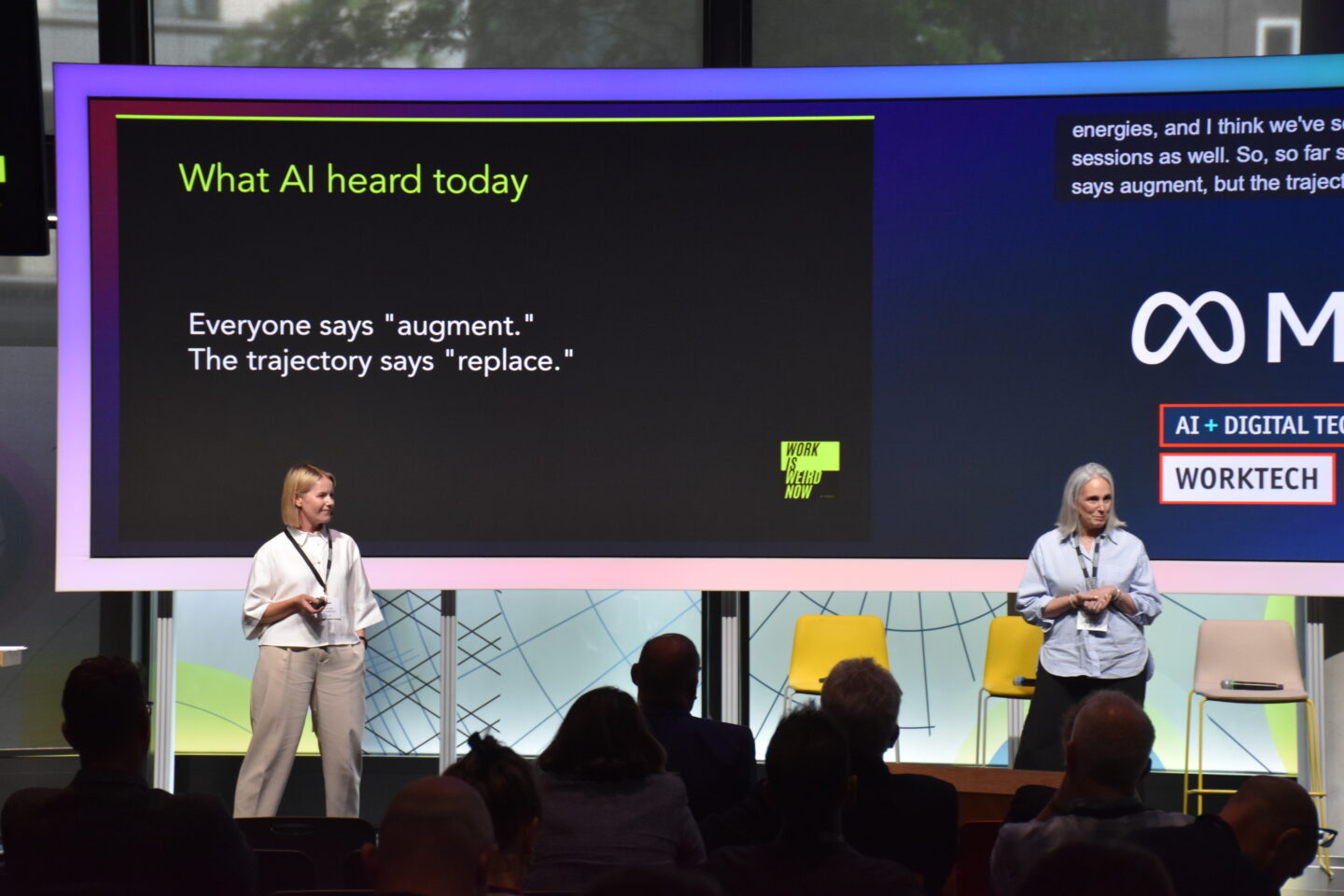
For delegates attending WORKTECH AI + Digital Technologies at Meta in London this June, the findings offer a timely reminder that workplace technology is not only about the corporate office, the smart building or the digital workplace platform. It is about how organisations use digital tools to solve real operational problems, support people under pressure and create more effective, responsive environments.
Technology as a support system for stretched teams
Hospitality is one of the clearest examples of a people-intensive workplace. Service quality depends on timing, communication, coordination, and the ability of staff to respond quickly to customer needs. When teams are short-staffed or under pressure, even small inefficiencies can have a significant impact on service, morale and performance.
Lolly’s research points to the growing role of practical digital tools in easing this pressure. From staff rotas and payroll to workforce communication and customer service delivery, technology is helping operators manage complexity with greater confidence.
Peter Moore, CEO at Lolly, explains: “Labour remains one of the biggest challenges in hospitality, as providers continue to navigate staff shortages and rising costs. The encouraging takeaway from this research is that operators aren’t standing still — they’re embracing practical tech tools to help teams work more efficiently.”
This is a theme that resonates far beyond hospitality. Across corporate real estate, facilities, HR, workplace strategy and technology leadership, organisations are asking the same fundamental question: how can digital systems help people spend less time on friction and more time on valuable work?
Automation that enhances, rather than replaces, human service
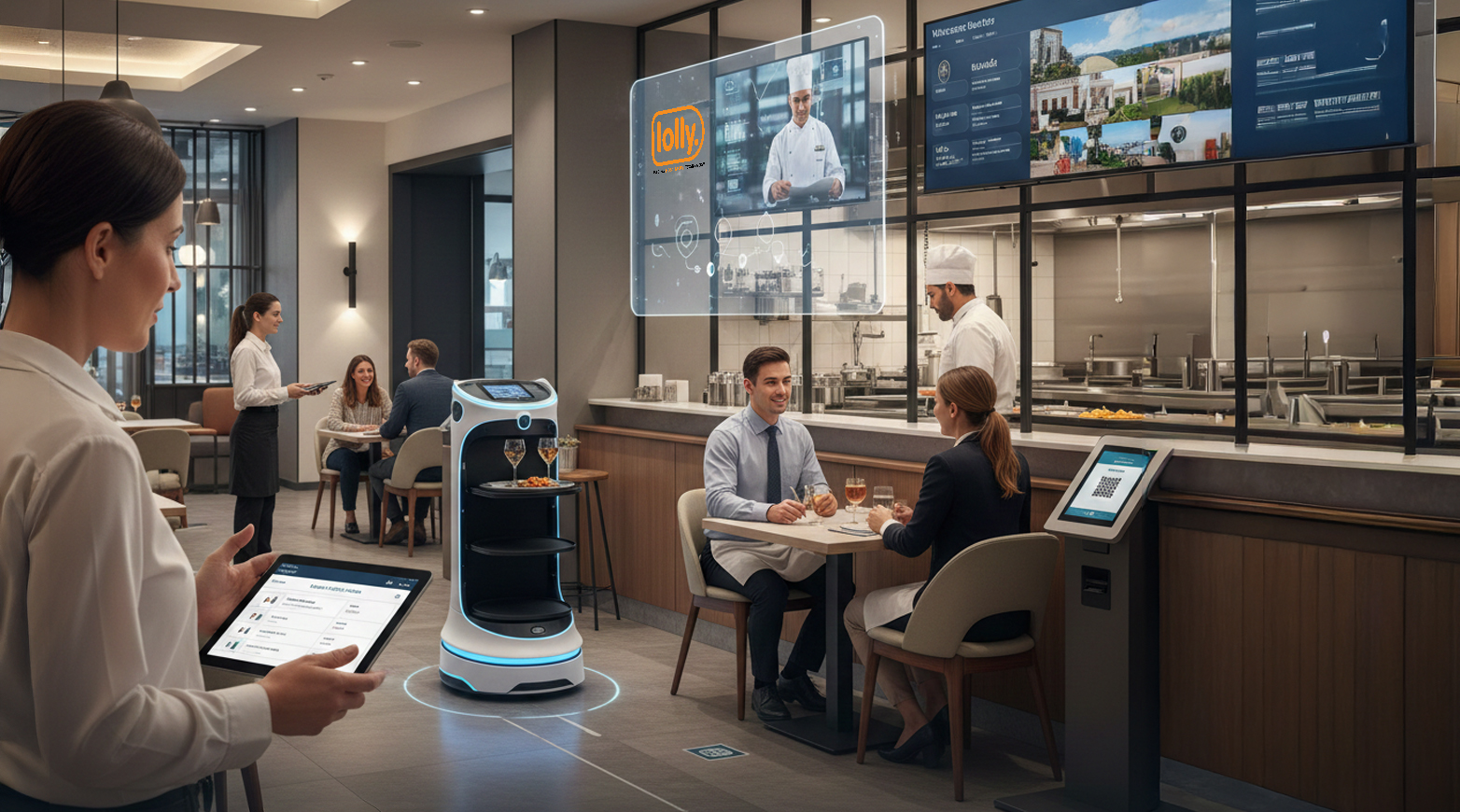
One of the most visible examples of this shift is Lolly Nova, the company’s robot waiter, which will be demonstrated at WORKTECH AI + Digital Technologies. For many delegates, the sight of a robot serving drinks may feel playful or futuristic. But behind the novelty is a more serious workplace question: what role should automation play in experience-led environments?
The answer is not simply to replace human interaction. In hospitality, as in the workplace more broadly, experience still depends on empathy, judgement, creativity and service. The opportunity lies in using automation to absorb repetitive or time-consuming tasks, enabling people to focus on higher-value, guest-facing work.
Moore notes that operators are already using integrated platforms to simplify everything from shift management to customer service delivery. “Whether through self-serve kiosks, smart kitchen displays, or automation like the Lolly Nova robot waiters, these tools are freeing up staff to focus on high-value, guest-facing tasks,” he says. “At the end of the day, it is about creating a better experience for both staff and customers.”
This distinction matters. The most successful applications of AI and automation are not those that remove the human from the experience, but those that redesign the system around what humans do best.
A live case study in operational innovation
For Andrea Tafuri, General Manager at UCL Marshgate Café, operated by Gather & Gather, Lolly Nova has already become part of daily operations. The café has been using a Lolly Nova robot since 2024, placing it at the forefront of hospitality technology adoption.
“The introduction of robot waiters has been a game-changer for our operations,” Tafuri says. “We are proud to be at the forefront of adopting innovative technology to enhance our services.”
For workplace leaders, this example offers a useful lens on digital adoption. The value of a technology is not measured only by the sophistication of the tool, but by whether it integrates into real workflows, supports existing teams and improves the experience for users.
That is one of the central challenges facing every organisation investing in AI and digital technologies. Whether deploying smart building systems, digital twins, workplace analytics, connected platforms or AI assistants, leaders must move beyond experimentation and ask how these tools change behaviour, improve decision-making and support people in the moments that matter.
From hospitality operations to the intelligent workplace
At WORKTECH AI + Digital Technologies, the broader conversation will explore how AI, automation, IoT, digital twins, analytics and connected platforms are reshaping the workplace. Hospitality may seem like a specific sector, but it provides a powerful illustration of the same forces now transforming offices, campuses and mixed-use environments.
The workplace is increasingly becoming a service environment. Employees expect spaces to be responsive, intuitive and personalised. Facilities teams need better data to anticipate demand and manage resources. Workplace leaders are under pressure to demonstrate value, improve experience and support performance. Technology is becoming the connective layer that helps these systems operate more intelligently.
In this context, the Lolly research highlights three important lessons.
- Adoption accelerates when technology solves a visible pain point. Staffing pressure is a real and immediate challenge in hospitality, which makes the value of digital workforce management easy to understand.
- Integration matters. Tools that connect scheduling, communication, service delivery and operational data are more valuable than isolated point solutions.
- The human outcome must remain central. Technology succeeds when it helps people deliver better service, make better decisions and work with less avoidable friction
Purposeful AI and the next phase of service innovation
As AI becomes embedded in more workplaces and service environments, the focus will increasingly shift from what technology can do to where it should be applied. This is especially important in people-facing sectors, where trust, experience and quality of service are critical.
Moore argues that the next phase of innovation must be purposeful. “As AI increasingly underpins innovation, we will work closely with our clients to apply it with purpose — keeping sustainability front of mind and embedding AI only where it delivers genuine impact.”
That principle will be central to the future of workplace technology. The goal is not technology for its own sake. It is the creation of more intelligent, sustainable and human-centred environments, where digital systems support better outcomes for organisations and the people they serve.
At WORKTECH AI + Digital Technologies, Lolly Nova will offer delegates a tangible demonstration of this future in action. It may be serving drinks, but the bigger story is about how automation is moving from novelty to necessity — and how the most effective technologies are those that help people, places and services work better together.
WORKTECH AI + Digital Technologies launches at Meta, Kings Cross on 9th June. Find out more here. Book your ticket here.