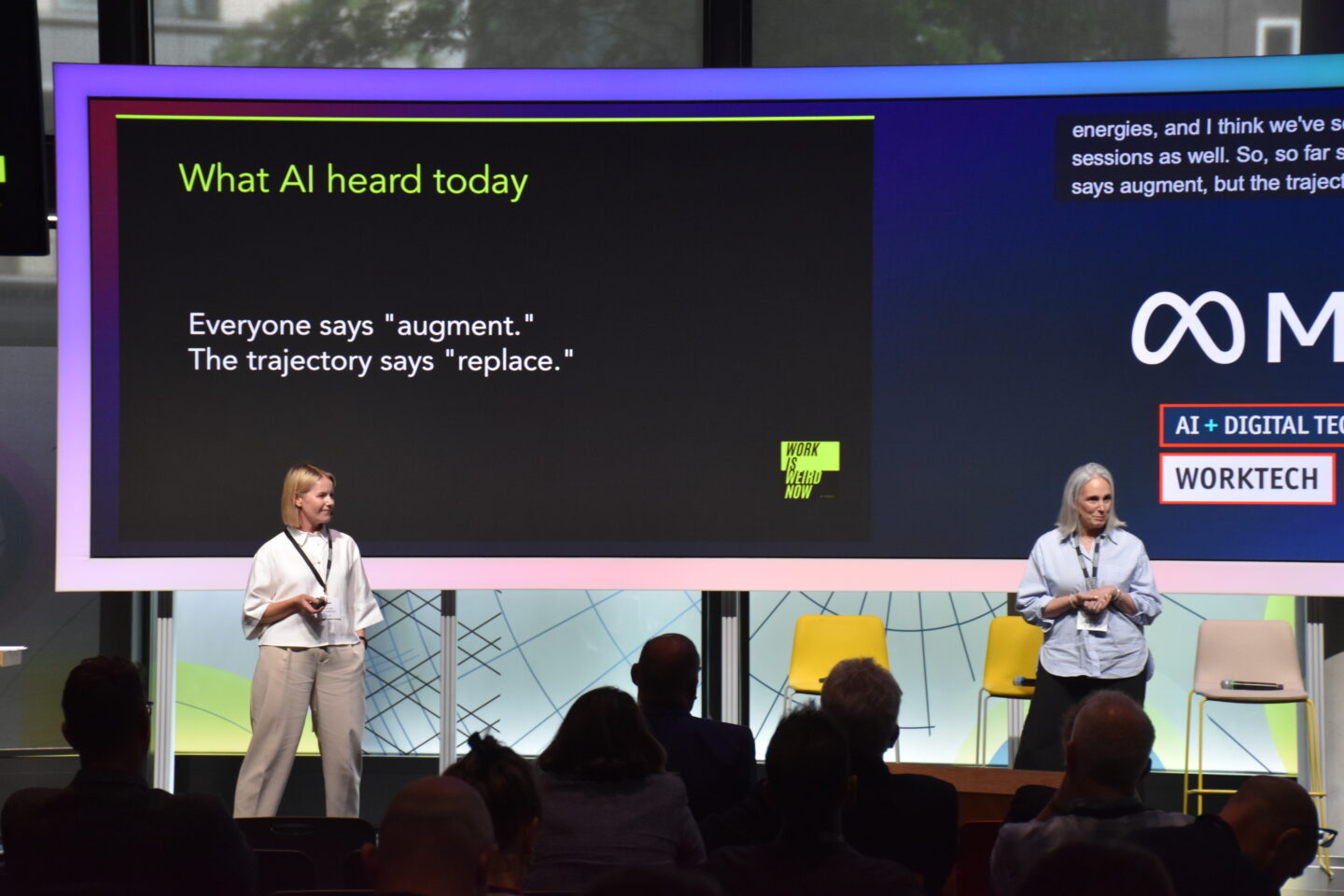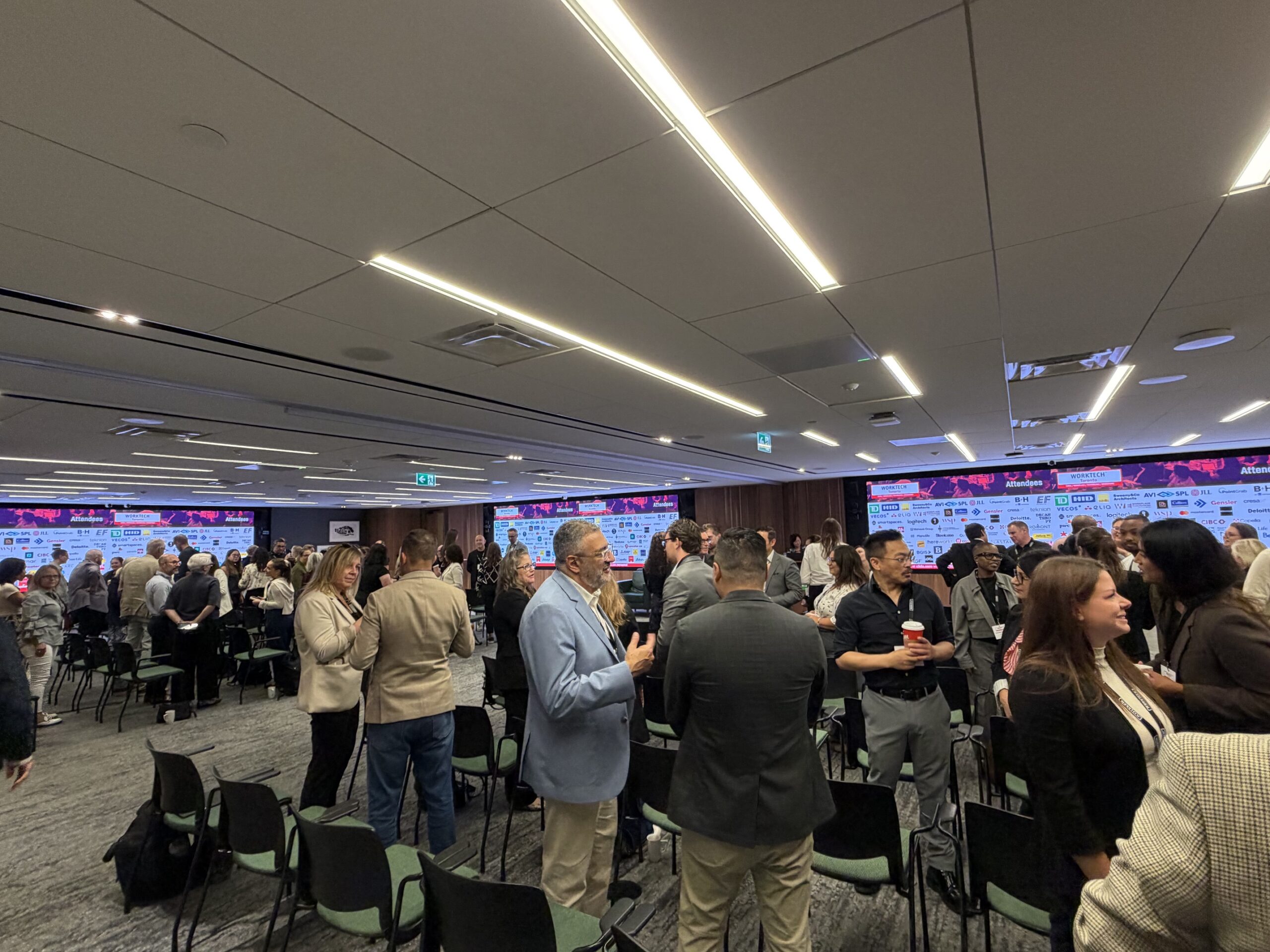
At WORKTECH26 Toronto, delegates were invited to share what is shaping their workplace strategies now, and where the biggest gaps remain. The results offer a useful snapshot of a sector trying to reconcile the human experience of work with the operational reality of managing space, technology, cost and performance.
There was no single dominant force shaping strategy. Employee experience and wellbeing led the response at 23%, closely followed by return-to-office expectations at 20%, cost pressure and portfolio optimisation at 19%, and the need to prove the value of the office at 18%.
That close split matters. It suggests that workplace leaders are not simply designing a better office or responding to an attendance policy. They are being asked to do both, while also making a sharper commercial case for the space they operate.
A fragmented workplace journey
The data exposed how far many organisations are from delivering a genuinely connected workplace experience.
Only 11% of delegates said they were very confident that the right people could access the right spaces at the right time through a connected and consistent experience. Almost half, 49%, were somewhat confident, saying their systems worked effectively in key areas. A further 39% were not very confident, describing the experience as fragmented or inconsistent.
The number of tools employees use reinforces the point. Nearly half of respondents said a typical employee uses four or more apps, credentials or processes during their workplace journey. Another 41% cited two or three. Just 9% said their employees had one connected experience.
For employees, this can mean a workplace that promises simplicity but asks them to navigate multiple systems to enter a building, book a desk, find a meeting room or access relevant services. For organisations, it creates an obstacle to understanding how space is used and whether the workplace is delivering the outcomes it was designed to support.
Integration is the obstacle, but the challenge is broader
When asked about the biggest barrier to creating a connected workplace, delegates pointed first to integration or data-quality challenges, at 28%. Legacy or disconnected systems followed at 24%, with security and privacy concerns close behind at 23%.
Together, those responses show that the issue is not merely the absence of a better app. The task is to connect systems responsibly, make their data reliable and protect employee trust in the process.
Yet technology alone will not solve the problem. Fifteen per cent identified a lack of clear organisational ownership as the key barrier. That reflects a familiar workplace challenge: responsibility often sits across real estate, IT, HR, facilities, security and business leadership, with no single team accountable for the end-to-end employee experience.
What must the workplace prove over the next 12 months?
The workplace most needs to prove that it supports productivity and performance, according to 38% of delegates. Collaboration and culture and belonging each registered 11%, while learning and development, wellbeing, and talent attraction were lower priorities.
This does not mean those softer outcomes have lost importance. Rather, it indicates that they may no longer be sufficient as the principal case for investment. Workplace leaders are being asked to demonstrate a clearer connection between the office, the way people work and measurable organisational value.
The polling also identified a critical management gap. Thirty-seven per cent said performance is not clearly measured by outcomes, making it the biggest disconnect between how work is changing and how organisations are managed. A further 12% said leaders still rely too heavily on visibility and presence.
That is a warning against treating attendance as a proxy for performance. If organisations want the office to play a meaningful role in the future of work, they need to define the outcomes it enables: better decisions, faster learning, stronger collaboration, more effective teams and work that people can do well.
Why is the office still a mandate rather than a magnet?
Perhaps the most direct finding came in the final question. Fifty-seven per cent said the biggest challenge was that the office is not yet a magnet, but remains a mandate. The remaining 43% identified siloed decision-making across real estate, business lines and leadership.
These are closely connected problems. An office becomes a magnet when it has a clear purpose, supports the work people need to do and is shaped by decisions that join up business priorities, people needs, technology and place.
Personalisation needs to support work, not simply preference
Delegates’ expectations of personalisation were also revealing. The largest group, 40%, wanted the space to better support how they do their job. Thirty-two per cent wanted an environment that responds more effectively to their sensory needs, while 28% prioritised personal preferences.
The implication is that personalisation should not be reduced to convenience or cosmetic choice. A more responsive workplace is one that recognises different tasks, modes of concentration, collaboration styles and sensory requirements. It is a practical route to helping people perform at their best.
The message from Toronto was clear: organisations do not need more disconnected workplace interventions. They need a more coherent experience, better measures of success and leadership willing to move beyond presence as the definition of performance.